Garissa county government has began taking stock of the number of its tourists, historical and natural resource’s sites which were previously not documented.
County executive in charge of Environment, Salah Yakub also said some unique wildlife including the rear Hirola antelope and birds will be filmed and used to market the county.
Speaking while on a tour of Bananei location on Saturday, Yakub said the county has unique tourist attraction sites and natural habitants.
He said rare resources in Kenya such as oil, gas, limestones are gysums are in the county. Yakub said unique rocks which are used to construct buildings and indigenous palm trees are found in the Garissa.
He further said the county government will keep the records and document historical sites. The records will be used to showcase the county as a tourist destination when exhibitions, forums and shows are held in future.
Garissa County has began taking stock of a number of its tourists, historical and natural resource’s sites which were previously not documented.
County executive in charge of environment, Salah Yakub also said some unique wildlife including the rear hirola antelope and birds will be filmed and use to market the county.
Speaking at the weekend at Bananei location while on tour, Farah said the county has one of the most attracting wildlife’s and unique natural habitants.
He said valuable resources such as oil, gas, limestones, gysums and unique rocks which can be used for construction can be used for construction and rear tall palm trees are also found in the county.
He further said the county government will ensure that it properly keeps the record and permanent data on the same to used to showcase when there will be any exhibition, forum and shows in future.
- See more at: http://www.the-star.co.ke/news/article-
Showing posts with label garissanews. Show all posts
Showing posts with label garissanews. Show all posts
Monday, 4 November 2013

Youth from Garissa County gets honored as Tree Ambassador

Abdikadir Aden Planting a tree at World Environmental Day
Coming from a minority community in Northern Kenya, Abdikadir is a young leader who exhibits big change for his society. He is committed and dedicated in every step he makes, giving back to his people as a volunteer and an environmental activist. He is an emerging icon of peace through environmental conservation.
Being honored as a Tree Ambassador, marks his fifth achievement, the first one being during Garissa Youth Summit for bringing a solution to community challenge in the year 2010. In the same year, he was recognized in the East Africa Community Service and received Youth Volunteer of the Year Award in 2010 for having sacrificed his time and resources for community service through Volunteer Services Overseas (VSO) and Ufadhili Trust, Nairobi.
In 2012, Abdikadir became Children and Youth Tunza Eco-Generation Regional Ambassador to North Eastern Kenya for Samsung Engineering Company and the United Nations Environment Programme (UNEP); A networking platform for Children and Youth. Through this, he exhibited good performance and leadership in supporting environmental activities in his community as a young leader.
This year, he received an African Young Achiever Award by the African Achievers Awards for his contribution as an empowered youth to the development of Africa at a colourful celebration held on 23rd February at Hilton Hotel Nairobi.
On Wednesday 26th June, 2013, Abdikadir was honoured as “Tree Ambassadors” in The Total Eco Challenge “Tree Ambassador” awards by Total Kenya. Total Eco Challenge has recognized him for personally recording exceptional achievement in tree planting, and being an inspirational and driving force to others. Abdikadir expresses his dedication that day by stating, “I am very happy tonight for this achievement. The best achievement that I got is giving back to my society. I will always dedicate myself and serve my community with passion and continue to inspire other young people”.
Abdikadir promotes climate change and environmental conservation and environmental protection. This involves advocating for the environment, supporting community environmental projects, ensuring environmental sustainability, and addressing different local and global environmental issues such as Global warming and Climate Change.
He hopes to deliver and support Garissa County Government in ensuring a clean and healthy environment.
Garissa governor pledges prudent use of Sh4 billion
ARISSA
governor Nathif Jama has pledged to ensure transparency in the use of
the Sh4 billion allocated from the National Treasury last week.

He has also urged Garissa county executive members to stick to their department’s budgets and focus on projects that have been planned for in the current financial year. Garissa has been allocated Sh4,847,000,000 from Treasury to finance its development and recurrent expenditure in the 2013/2014 financial year.
The governor said Sh1.3 billion will go to health, sanitation and water sectors which he said are critical in developing a semi-arid county such as Garissa. Infrastructure development has been allocated Sh677,775,000 out of which Sh400,000,000 will be for roads and rehabilitation of civil works. County executive member for finance and economic planning, Idriss Mukhtar said he was delighted that Garissa was one of the eight counties whose budget was not questioned by Treasury and Controller of Budget.
“We had no deficit in our budget and ensured our development and recurrent expenditure was within our revenue collection capacity,” he said. Before Garissa’s budget was approved county assembly members had passed the County Appropriation Act 2013 which authorised withdrawal of funds from the county accounts.
Governor Nathif asked public officials in the county to be transparent and impartial as they deliver services to the local residents. “Access to resources will help locals plan and manage their development programmes effectively,” he said The governor said more funding will be set aside expansion of schools, health centre, markets, infrastructure and communication to improve living standards of communities in the county.
He warned against clannism and nepotism which he said could be a threat to implementation of devolution if encouraged by leaders. The governor also said the county government will focus on exploiting the tourism potential in Garissa using the funds that have been disbursed by Treasury. Nathif said his government will also give attention to improvement of security, education, infrastructure, water, sanitation and waste management, healthcare services, emergency response services, social services, environment, entrepreneurship, trade and manufacturing. Pastoralism is a major economic activity among the communities in the county.
However, the tourism sector is also growing with a number of hotels and resorts coming up. This compliments attractions such as the bouralgy Giraffe Sanctuary and other wildlife that contribute to the county’s tourism industry.
The county prides itself in having the only ‘long-necked Gerenuk’ East African. The dry and arid landscape could be exploited to offer tourism packages that encompass camel-back expeditions and camping activities. The governor said region could also be opened up to dessert rallying activities similar to those carried out in different regions in the world.
Previously leaders in the county had said Tana River, which flows through the region, is a great source of water that should be exploited to enable Garissa expand agricultural production.
He has also urged Garissa county executive members to stick to their department’s budgets and focus on projects that have been planned for in the current financial year. Garissa has been allocated Sh4,847,000,000 from Treasury to finance its development and recurrent expenditure in the 2013/2014 financial year.
The governor said Sh1.3 billion will go to health, sanitation and water sectors which he said are critical in developing a semi-arid county such as Garissa. Infrastructure development has been allocated Sh677,775,000 out of which Sh400,000,000 will be for roads and rehabilitation of civil works. County executive member for finance and economic planning, Idriss Mukhtar said he was delighted that Garissa was one of the eight counties whose budget was not questioned by Treasury and Controller of Budget.
“We had no deficit in our budget and ensured our development and recurrent expenditure was within our revenue collection capacity,” he said. Before Garissa’s budget was approved county assembly members had passed the County Appropriation Act 2013 which authorised withdrawal of funds from the county accounts.
Governor Nathif asked public officials in the county to be transparent and impartial as they deliver services to the local residents. “Access to resources will help locals plan and manage their development programmes effectively,” he said The governor said more funding will be set aside expansion of schools, health centre, markets, infrastructure and communication to improve living standards of communities in the county.
He warned against clannism and nepotism which he said could be a threat to implementation of devolution if encouraged by leaders. The governor also said the county government will focus on exploiting the tourism potential in Garissa using the funds that have been disbursed by Treasury. Nathif said his government will also give attention to improvement of security, education, infrastructure, water, sanitation and waste management, healthcare services, emergency response services, social services, environment, entrepreneurship, trade and manufacturing. Pastoralism is a major economic activity among the communities in the county.
However, the tourism sector is also growing with a number of hotels and resorts coming up. This compliments attractions such as the bouralgy Giraffe Sanctuary and other wildlife that contribute to the county’s tourism industry.
The county prides itself in having the only ‘long-necked Gerenuk’ East African. The dry and arid landscape could be exploited to offer tourism packages that encompass camel-back expeditions and camping activities. The governor said region could also be opened up to dessert rallying activities similar to those carried out in different regions in the world.
Previously leaders in the county had said Tana River, which flows through the region, is a great source of water that should be exploited to enable Garissa expand agricultural production.
Remote Kenyan High School Supplied with Water
 The Garissa Boys' High School in Kenya has a new water system, thanks to
the efforts of the Kenyan government, the U.S. Embassy in Nairobi,
military engineers, and a civil affairs team from Combined Joint Task
Force-Horn of Africa (CJTF-HOA).
The Garissa Boys' High School in Kenya has a new water system, thanks to
the efforts of the Kenyan government, the U.S. Embassy in Nairobi,
military engineers, and a civil affairs team from Combined Joint Task
Force-Horn of Africa (CJTF-HOA).
A dedication ceremony on March 7, 2009 involving Civil Affairs Team 5 from the A Company, 414th Civil Affairs (CA) Battalion, a dozen local schoolmasters, local clerics and the Honorable Aden Duale, the Dujis constituency's parliamentary representative, was held to officially dedicate a 200,000-liter concrete cistern, a pump house and a tower supporting a pair of 10,000-liter holding tanks.
"The system itself is an enormous improvement," said Harun Mohamed Yussuf, the school's principal, "because before, there was not running water. That was a problem, especially where the boys could not shower or bathe here and had to go elsewhere. This will make the boys more able to concentrate on what it is they are doing here, and that is learning."
The Garissa School complex is spread over several acres of mostly arid land, with water pipes and electrical conduit buried less than two feet into the native clay. Each existing pipe section or wiring conduit is surrounded by broken-up concrete and gravel, and covered with a mixture of dry clay and sand. Effective maintenance had become an issue and the existing infrastructure needed more help than the school could afford by itself.
There are trees and brush here, but the majority of what grows naturally has been parched for as long as the Garissa School's current class of students has been alive. The school's geographic surroundings resemble the high desert of the American southwest, and civil affairs reports say the desert is populated by nomadic peoples who live on what they find to eat or drink day-to-day.
U.S. Army Major Andrew Rocky Raczkowski, the civil affairs liaison for Kenya, said the North Eastern Province has been subjected to drought conditions for nearly two decades. Raczkowski was part of the first civil affairs visit to Garissa more than five years ago. He said the annual December rains have been short, making life difficult for the nomads, the people of Garissa and the North East Province as a whole.
The school's immediate water concerns were met by the American Embassy in Nairobi and the military engineers working for CJTF-HOA because of a three-phase approval process. In order for a project to receive U.S. assistance, Raczkowski said, it must be reasonable in scope, sustainable by the local population after the initial construction team has left, and it must help to promote regional cooperation and partnership.
Raczkowski, who spoke at the dedication, and Captain Omar Robinson, the civil affairs team leader in the district, have helped to develop the project past the idea stage.
"It was a great honor, especially to see the work that the civil affairs teams are doing out here in the North East Province," said Raczkowski, who delivered his speech in the Somali dialect spoken by the Dujis people. "It's great to see all the work they're doing here in Kenya, building the projects and the relationships that we were sent here to build. It's really heartwarming for me, especially coming back to this region after we opened up this area (for Army civil affairs teams) five years ago.
"The 'Three-D' term that we use is, first, development from USAID, followed next by diplomacy from the U.S. Embassy. We (civil affairs teams), the defense "D," come in and take the lead from the U.S. Embassy with the security capacity which allows us to succeed."
The Garissa Boys' High School has a celebrated history, according to Minister Duale, of giving young men strong educations and a sound sense of Kenyan nationalism. Duale is himself a graduate of the school, and he credits a solid education there for helping him get into college.
"I can tell you that the last time I visited, the way that water system was and what that water tank looked like … looking at it today is, to me, like a dream," said Duale. "I remember I approached the civil affairs team that was here when (Garissa School's water system) first got my attention, and asked them to help. Today, I am grateful to the ambassador's office, to the civil affairs team and through them the U.S. government for the contributions they are making to this province through water and education."
The water system was constructed by Kenyans under the auspices of CJTF-HOA engineers and contracting officials. The scope of the project, considering the drought-stricken area it lies in the middle of, is in the hundreds of thousands of dollars.
Functionally, according to Navy civil engineering officer Navy Lieutenant (junior grade) Tim Marinelli, projects like the one at the Garissa School have to be of an easily-maintained design with capacity to be sustainable in a desert environment a long way from repair parts.
"The way this design works is pretty simple," said Marinelli, CJTF-HOA's country engineer for projects in Kenya. "When Garissa has electricity, water from the village is pumped here to the school. The school used to put water in a tank that was a few feet off the ground, and then they would let gravity pull water into the pipes they have going to all the buildings."
The new cistern and higher platform for the two new holding tanks will provide enough water volume for the entire school.
"With the support that was shown today by the minister of education, the local leadership and the United States through the participation of the civil affairs team, it is going to encourage everybody to do his bit to attain the necessary levels to access university education," said Principal Yussuf. "This is the world helping my students. This is the best moment for them. They have all of the support of the international community, and the government of Kenya, local leadership and all the partners.
Abdullahi Noor, a 19-year-old senior aspiring to become a journalist, said he hopes that the ability to turn on tap water here makes things better for future students.
"Today, the students here are celebrating what the Soldiers and engineers have given us; this water system. When the water system was not there, we had to go looking elsewhere for water. Even, we had to go to other schools, and the town," Noor said. "Water is life. It gives us our lives; to wash, to take a bath, for cooking and to drink. This means everything."
Dealing with al-Shabaab operations in Kenya is not a question of counter-terrorism, it is a question of Kenya itself
 The UK, the US,
Germany, Canada and Interpol have begun assisting Kenya’s investigation into
the recent attack on the Westgate shopping centre in Nairobi, where 61
civilians have been killed in a ruthless assault and subsequent hostage
situation. This active support comes in the wake of international pledges of assistance
to the Kenyan security services while the siege was underway.
The UK, the US,
Germany, Canada and Interpol have begun assisting Kenya’s investigation into
the recent attack on the Westgate shopping centre in Nairobi, where 61
civilians have been killed in a ruthless assault and subsequent hostage
situation. This active support comes in the wake of international pledges of assistance
to the Kenyan security services while the siege was underway.
With numerous
individuals from France, the UK and the US having been caught up in the attack,
there is the general impression that terrorism in Kenya is a question of
international conflict. While it is true this atrocity has been claimed by al-Shabaab
to be a response to the occupation of Kenyan forces in Somalia, the attack on
the Westgate shopping centre comes as part of a long line of terrorist activity
in the region that predates Kenya’s 2011 invasion of Somalia.

As we try to come
to terms with the catastrophe that has befallen Kenya, we need to think hard
about the nature of the threat and what the best response might be. This means,
first of all, understanding that Kenya and Somalia are intimately connected.
 Two percent of
the Kenyan population is ethnically Somali—living in, and enjoying, Kenyan
citizenship. Are we 2% actually? The “Somali” peoples have been spread across territory that is now
Kenyan since 1885 when Ogaden Somalis broke the power of the Orma tribe. The
jagged line in the map below shows the part of Kenya heavily populated by those
of Somali ethnicity.
Two percent of
the Kenyan population is ethnically Somali—living in, and enjoying, Kenyan
citizenship. Are we 2% actually? The “Somali” peoples have been spread across territory that is now
Kenyan since 1885 when Ogaden Somalis broke the power of the Orma tribe. The
jagged line in the map below shows the part of Kenya heavily populated by those
of Somali ethnicity. While in the
1960s, division between Kenya and Somalia was one of territory, it has now become
extra-territorial. However, any such terrorist activity predates Kenya’s 2011
military entrance into Somalia. The earliest case of terrorist activity in
Kenya similar to what we have witnessed in these past few days was the bombing
of a Jewish-owned hotel on New Year’s Eve in 1980. The Nairobi hotel was
targeted by a member of the Popular Front for the Liberation of Palestine. (Note
the similarities with the Westgate shopping centre which has also been targeted
for being Jewish-owned.)
While in the
1960s, division between Kenya and Somalia was one of territory, it has now become
extra-territorial. However, any such terrorist activity predates Kenya’s 2011
military entrance into Somalia. The earliest case of terrorist activity in
Kenya similar to what we have witnessed in these past few days was the bombing
of a Jewish-owned hotel on New Year’s Eve in 1980. The Nairobi hotel was
targeted by a member of the Popular Front for the Liberation of Palestine. (Note
the similarities with the Westgate shopping centre which has also been targeted
for being Jewish-owned.)
The most
significant terrorist incident in the region, however, was when al-Qaeda
conducted twin bombings of US embassies in Nairobi and Dar es Salaam (Tanzania)
in 1998. The attack in Tanzania led to 11 deaths and in Kenya to 213 deaths.
This brought to the attention of the US administration al-Qaeda’s ability to
organise large and devastating operations long before 9/11, and helps explain
their ongoing interest in all terrorist developments in East Africa.
The fact of a long
list of precedents demonstrates how the sad events we have witnessed in the
Westgate shopping centre have not come out of the blue.
The common
impression is that al-Shabaab, which is formally allied to al-Qaeda, is acting
in response to Kenya’s 2011 invasion. That is certainly what al-Shabaab has
been tweeting. The truth is that the Kenyan military entered Somalia only after
al-Shabaab militants crossed the border into Kenya to kidnap and attack aid
workers of the Dadaab refugee camp. The camp, which is the largest refugee camp
in the world, hosts those who have fled violence and famine in Somalia. Kenya
acted in response to a developing situation that was brought about by al-Shabaab’s
misuse of the southern Somali peoples.
It is important,
therefore, to note two things about the current al-Shabaab/al-Qaeda threat. The
first is that al-Shabaab’s political justification for the atrocity conducted
in the shopping centre carries no weight. In some ways the Westgate attack is
similar to the multiple bombings carried out in 2010 by al-Shabaab in Kampala,
Uganda, which killed 74. While it may be true that in both the Kampala and Westgate
attacks al-Shabaab acted in opposition to each country’s military occupation of
Somalia, the reality is that in both cases likely-international targets were
chosen. Members of al-Shabaab hold an ideological and strategic commitment to
target Israeli, US and European persons. They seek international attention, and
support for a supposed global Jihad. Whether Kenya has forces in Somalia or not
is an important but insufficient reason the terrorist networks act in this way.
Indeed, such is the desire for international attention, al-Shabaab and al-Qaeda
care little for whether East African Muslims are killed in the process.

The second point
to note is that fighting al-Shabaab is not a question of strengthening counter-terrorism
or security personnel. While it is understandable that foreign governments wish
to pledge support for Kenya’s security forces, this is not something that can help
anything more than short-term reactions to atrocities. The border between Kenya
and Somalia is 682 kilometres long, a straight line drawn in the dust. Since
even before the collapse of the Siad Barre regime in 1991, Somalis have sought
refuge in Kenya and other countries, rendering their population arguably the
most extra-territorially networked in East Africa. This has led to both the “ups”
of economically booming mini-cities such as Eastleigh in Nairobi, and the “downs”
of an ever-enduring refugee crisis. The graph below shows total numbers of
refugees in Kenya over a 15-year period according to UNHCR, and the proportion that
have come from Somalia. The number of Somali refugees in Kenya has fluctuated
just below a quarter of a million, which means it is ludicrous to imagine that tightening
border-crossing checkpoints will inhibit a determined terrorist network.

Responding to
the terror threat requires a winning of hearts and minds among both Somali
refugees and existing Kenyan nationals of Somali ethnicity. Kenya has been
independent for 50 years but Somalis have lived in Kenya for 128 years—this is something
that must be recognised by both Kenyans and the international community. Experience
testifies to how beating local terrorist cells is only achieved when local residents
have reason to trust the police. That is, unfortunately, not something most ordinary
Kenyans feel they can do, let alone those living in Kenya illegally or as refugees.
The fates of Kenya
and Somalia are inextricably tied. Any policies that come out of evaluating the
Westgate attack need to remember this. So long as in Somalia there is periodic famine
and constant violence, and in Kenya a state that rewards the rich of certain tribes,
the threat of political frustrations leading to terrorism will sadly endure
from within Kenya’s borders.
Want to know if Islam is a safe religion and free from terrorism and all that you hear about it.... CNN might just have an answer for that.

CNN reporter Nic Robertson visited Eastleigh, A somali Neigbourhood in Nairobi, Kenya where he says, Christian and Muslim preachers are often seen discussing key religious issues, with opposing sides putting forward their arguments to refute the other’s claims about their religion.
In the report, CNN interviewed one Saad Omar Nasser, a new 23-year-old Kenyan Muslim Convert from Christianity.
“I feel Islam is complete, Everything you want to know (about it), every inquiry you have, you [will]
automatically… get an answer [for it].” Saad Omar Nasser tells Robertson, a Kenyan who, after 18 months of soul-searching, decided to
change his religion from Christianity to Islam.
Nasser says, Before he made the life-changing decision, he used to listen to the debates
between Muslim clerics and Christian pastors who battle it out in the
streets of Nairobi and who speak on the Muslim-Christian relations as shown in this picture.
Muslim cleric Yahya Issa, one of the preachers, tells CNN reporter Nic Robertson
that between five to 10 Christians convert to Islam after they watch
their debates, which have subjects like, Is Jesus God, is Jesus, The son of God or Just a Prophet, Who started Christianity and so on. The CNN reporter said Nasser had converted to Islam in
September.
The CNN reporter claims that, In the wake of the Westgate attack in September and with the news
the network claimed in a recent report that al-Shabaab is working to recruit
vulnerable youths in Kenya, new converts, is an easy way for Al- Shabaab’s tactics: radicalizing the new
converts.

Is this a quick way for Kenyan youths to be radicalized? or are the Kenyan Youth, who are mostly idle, jobless being radicalized by Al-Shabaab in quite a number?
While this may be true, but in the CNN report,
which runs for about three minutes, Robertson says, they have not seen a new
convert who said he has been radicalised adding , We have
not heard or seen a Muslim cleric(preacher) who is preaching hate against Christians or the killing of non-Muslims.
According to the CNN, Nasser’s change in faith is worrisome.
“There are no nationally publicised government figures here
for the number of conversions, and in the aftermath of the Westgate
mall attack [the conversion] has some people here concerned,” the CNN
reporter says.
The problems with
the Interview is that, Robertson has interviewed only one man,
Robert Ochalar, who runs a US-funded organisation that combats extremism
in Nairobi neighborhoods. According to Robertson, Ochalar tells him
that “Muslim converts are on the increase and radicals prey on their
innocence.”
“They are being
taken over by these young radicals who take
[the converts] in and then distort the whole religion,” Ochalar says.
Islam is against terror, killings and all the filth you hear about the
world now. That is why it is the only religion which continues to make
new recruits.
In the CNN report, it is worth to note that, no Muslim preacher has was heard or seen preaching hate against other
people or the killing of non-Muslims.
CNN also didn’t even interview any official from the
Supreme Council of Kenya Muslims, the highest body representing Muslims
in Kenya, to ascertain the depth and breadth of radicalisation of young
Kenyan Muslims.
With no evidence, CNN claims that al-Shabaab, which
attacked the Westgate mall in the same month when Nasser converted to
Islam, is at work trying to “recruit vulnerable youths in Kenya.”
“In Kenya’s overcrowded, mostly moderate mosques, new
converts have never been so vulnerable,” Robertson concludes in his
report.
Mandera to hire 127 reservists for patrols
THE Mandera county government will employ 127 police reservists as a
means of curbing insecurity. Governor Ali Ibrahim Roba said the officers
will start working in December.
 He said the officers will be paid Sh7500 monthly to motivate them to
work harder and gather intelligence information. Roba was speaking at
BaoBab Beach Resort-Diani Kwale on Sunday. He said the reservists will
be deployed in Mandera town.
He said the officers will be paid Sh7500 monthly to motivate them to
work harder and gather intelligence information. Roba was speaking at
BaoBab Beach Resort-Diani Kwale on Sunday. He said the reservists will
be deployed in Mandera town.
The meeting was attended by all county representatives. It was meant to discuss development matters and how leaders can work together. Roba said the county gopvernment will purchase six four-wheel vehicles to be boost security patrols.
“Out of the 30 wards, only one wards that have been experiencing terror threats and so we treat it as a isolated problem to a given a small locality which is Bule Jamuhuri ward,” he said.
Roba said Bule Jamuhuri has been experiencing terror threats due to its proximity to Somali border. “We will do all possible to ensure security matters are take care of,” he said. Roba said the county goverment is establishing cross border relationships neighbouring counties to boost security.
“We are building across border relationship with our neighbors because when we are affected they are also affected so that we can jointly manage the issue of terror threats,’ he said.
“We believe as we move forward the threats of terror in the small town ward Bule Jamuhuri which is the only affected area will be reduced,” he noted.
The meeting was attended by all county representatives. It was meant to discuss development matters and how leaders can work together. Roba said the county gopvernment will purchase six four-wheel vehicles to be boost security patrols.
“Out of the 30 wards, only one wards that have been experiencing terror threats and so we treat it as a isolated problem to a given a small locality which is Bule Jamuhuri ward,” he said.
Roba said Bule Jamuhuri has been experiencing terror threats due to its proximity to Somali border. “We will do all possible to ensure security matters are take care of,” he said. Roba said the county goverment is establishing cross border relationships neighbouring counties to boost security.
“We are building across border relationship with our neighbors because when we are affected they are also affected so that we can jointly manage the issue of terror threats,’ he said.
“We believe as we move forward the threats of terror in the small town ward Bule Jamuhuri which is the only affected area will be reduced,” he noted.
Don’t send more Amisom troops, build Somali Army
The UN Security Council is set to approve an additional 4,000 troops
for Amisom in Somalia to help the fledging government maintain security
in that nation.
This follows the Africa Union request to send in more soldiers to fight Al Shabaab due to its threats to nations in the region. If this additional force is deployed, it will bring the total number of the Amisom troops from several African nations to 22,000.
 Amisom controls Mogadishu, Kismayu and other major towns in the
south of the country. According to the UN, Al Shabaab controls about a
third of the territory. Recent UK media reports suggest that the
organisation, which UN says has about 5,000 men, is regrouping,
recruiting and training daily contrary to perceptions that they are
finished.
Amisom controls Mogadishu, Kismayu and other major towns in the
south of the country. According to the UN, Al Shabaab controls about a
third of the territory. Recent UK media reports suggest that the
organisation, which UN says has about 5,000 men, is regrouping,
recruiting and training daily contrary to perceptions that they are
finished.
The Guardian newspaper report quotes KDF sources saying that the group’s number could actually be three times more, and that in spite of being formally removed from Kismayu, Al Shabaab maintains a parallel underground administration that collects revenue from businesses.
The same report suggests that Amisom advances to other areas under the control of the group have lost momentum in recent months due to inadequate equipment.
My take is that both the AU and the UN are wrong in pursuing expansion of Amisom troops at the expense of building the capacity of Somalia’s defence forces. Its Army, estimated at just about 10,000 men converted from local militias, is so ill-equipped that it lacks the capacity to secure towns freed from Al Shabaab.
For a country as vast as Somalia, facing a major terrorist insurgency, its security forces do not have a single aircraft to help its forces mobilse when necessary. Its so-called Army, where the rank and file earn an inconsistent, paltry pay of $160 per month, suffers questions of trust and legitimacy because of their perceived affiliations to clans and regional powers.
It is illogical to invest so much resource in sending foreign armies to police the country, yet the national government urgently needs support to build its own security forces.
Amisom spends about US$500 million annually for deploying its 17,000 troops in Somalia. Regional countries spend similar amounts to support troops in that country.
Uganda’s budget for its forces in Amisom last year was about $100 million. Kenya probably spends even more. Yet, the impact of these foreign forces in Somalia is minimal in my view, relative to what a well trained and equipped Somali forces would have achieved.
First, the amounts spent on the proposed 22,000 Amisom forces annually is more than adequate to recruit 100,000 men into the Somali Army, complete with their artillery.
Secondly, there is little doubt that local Somalis understand the terrain and would, according to some UN reports, offer “better policing and better intelligence”.
It is also rational to suggest that properly equipped, trained and well remunerated Somali forces would easily overrun the insurgent groups, and be a more attractive alternative for the youth to join.
It makes pretty good sense to teach folks how to fish than to give them fish. he Somalia Army even under the TFG regime suffered low morale and defection due to poor terms and the lack of adequate equipment to respond to threats.
Now that Somalia has a government that is recognised globally, it is time the international community invested in its people in order to help the nation build its capacity.
The Amisom forces can then be redeployed to its porous international borders to stop infiltration until security is restored in the country.
This follows the Africa Union request to send in more soldiers to fight Al Shabaab due to its threats to nations in the region. If this additional force is deployed, it will bring the total number of the Amisom troops from several African nations to 22,000.
 Amisom controls Mogadishu, Kismayu and other major towns in the
south of the country. According to the UN, Al Shabaab controls about a
third of the territory. Recent UK media reports suggest that the
organisation, which UN says has about 5,000 men, is regrouping,
recruiting and training daily contrary to perceptions that they are
finished.
Amisom controls Mogadishu, Kismayu and other major towns in the
south of the country. According to the UN, Al Shabaab controls about a
third of the territory. Recent UK media reports suggest that the
organisation, which UN says has about 5,000 men, is regrouping,
recruiting and training daily contrary to perceptions that they are
finished.
The Guardian newspaper report quotes KDF sources saying that the group’s number could actually be three times more, and that in spite of being formally removed from Kismayu, Al Shabaab maintains a parallel underground administration that collects revenue from businesses.
The same report suggests that Amisom advances to other areas under the control of the group have lost momentum in recent months due to inadequate equipment.
My take is that both the AU and the UN are wrong in pursuing expansion of Amisom troops at the expense of building the capacity of Somalia’s defence forces. Its Army, estimated at just about 10,000 men converted from local militias, is so ill-equipped that it lacks the capacity to secure towns freed from Al Shabaab.
For a country as vast as Somalia, facing a major terrorist insurgency, its security forces do not have a single aircraft to help its forces mobilse when necessary. Its so-called Army, where the rank and file earn an inconsistent, paltry pay of $160 per month, suffers questions of trust and legitimacy because of their perceived affiliations to clans and regional powers.
It is illogical to invest so much resource in sending foreign armies to police the country, yet the national government urgently needs support to build its own security forces.
Amisom spends about US$500 million annually for deploying its 17,000 troops in Somalia. Regional countries spend similar amounts to support troops in that country.
Uganda’s budget for its forces in Amisom last year was about $100 million. Kenya probably spends even more. Yet, the impact of these foreign forces in Somalia is minimal in my view, relative to what a well trained and equipped Somali forces would have achieved.
First, the amounts spent on the proposed 22,000 Amisom forces annually is more than adequate to recruit 100,000 men into the Somali Army, complete with their artillery.
Secondly, there is little doubt that local Somalis understand the terrain and would, according to some UN reports, offer “better policing and better intelligence”.
It is also rational to suggest that properly equipped, trained and well remunerated Somali forces would easily overrun the insurgent groups, and be a more attractive alternative for the youth to join.
It makes pretty good sense to teach folks how to fish than to give them fish. he Somalia Army even under the TFG regime suffered low morale and defection due to poor terms and the lack of adequate equipment to respond to threats.
Now that Somalia has a government that is recognised globally, it is time the international community invested in its people in order to help the nation build its capacity.
The Amisom forces can then be redeployed to its porous international borders to stop infiltration until security is restored in the country.
Sunday, 3 November 2013
Funding shortage forces UN to reduce food rations for refugees in northern Kenya
 31 October 2013 – Two United Nations humanitarian agencies
announced today that they will be forced to reduce food rations for more
than half a million refugees in the Dadaab and Kakuma refugee camps in
northern Kenya beginning tomorrow due to lack of resources.
31 October 2013 – Two United Nations humanitarian agencies
announced today that they will be forced to reduce food rations for more
than half a million refugees in the Dadaab and Kakuma refugee camps in
northern Kenya beginning tomorrow due to lack of resources.“We have done everything possible to avoid this, but it has become necessary to reduce ration sizes by 20 per cent in November and December in order to stretch our existing food stocks to last through the end of the year,” said Ronald Sibanda, Country Director in Kenya for the World Food Programme (WFP).
“We hope this will be a temporary measure as we appeal to donors to come to the assistance of the hundreds of thousands of refugees who rely on WFP to meet their daily food needs.”
WFP urged donors to respond to its urgent appeal “as quickly as possible,” noting that it needs about $10 million every month to distribute more than 10,000 metric tons of food to refugees in the two camps.
While reduced rations will allow food distributions to continue for the 535,000 camp-based refugees through the end of the year, further cuts may be necessary if no additional resources become available, as food stocks will be nearly exhausted by January.
“We believe that the international community understands the importance of continuing this vital food lifeline for the refugees in Dadaab and Kakuma,” said Raouf Mazou, the Representative of the UN High Commissioner for Refugees (UNHCR) for Kenya.
“We are concerned that a reduction in rations could have a negative impact on the health and nutrition of refugees who rely on the food assistance,” he stated.
The 20 per cent reduction in ration sizes means that refugees will not receive the World Health Organization’s (WHO) minimum recommended energy requirements of 2,100 kilocalories per day and will instead get 1,680 kilocalories.
WFP has been providing food assistance, consisting of cereals, pulses, vegetable oil and salt, to thousands of refugees from across the region since the camps in Dadaab and Kakuma were established more than 20 years ago.
KDF destroys Al-Shabaab camp
 The Kenya Defence Forces Thursday evening said they had
destroyed an Al-Shabaab camp, which authorities believe was used to
train the Westgate mall attackers.
The Kenya Defence Forces Thursday evening said they had
destroyed an Al-Shabaab camp, which authorities believe was used to
train the Westgate mall attackers.
In a statement,
Colonel Cyrus Oguna, the KDF Operations Information Officer, said the
soldiers had conducted “a major aerial offensive” on Al-Shabaab camp in
Hurguun.
“The air strike completely destroyed an
Al-Shabaab training camp at Hurguun. Initial reports from the ground
confirmed that four technical vehicles and a weapons store were
destroyed,” he said.
TRAIN OPERATIVES
“The
training camp has been used by Al-Shabaab to train operatives, some of
whom are eventually infiltrated into the country. The Westgate attackers
received their training at this camp,” he said.
He added that there were at least 300 new Shabaab recruits during the attack and “many” might have been killed or injured.
Col
Oguna said this latest attack was is a continuation of the Jillib
attack, in which an Al-Shabaab Commander Abdullahi Ali alias Ante Ante
and Abdi Fatah were killed.
“Operations of this nature
will be sustained into the future, and form part of a broader African
Mission in Somalia (Amisom) effort in stabilising Somalia. They further
complement operations being conducted by the Federal Government of
Somalia and other allied forces to degrade remnants of Al-Shabaab’s
capacity.”
The announcement followed an earlier
statement by Amisom, which said KDF had resumed attacks on suspected
Al-Shabaab hideouts in Middle, Lower Juba and Bay regions of Somalia.
“Targeting
these remaining Al-Shabaab locations will complement the operations
already being conducted by the Federal Government of Somalia and other
allied forces as well as deny Al-Shabaab freedom of movement and further
reduce their ability to perpetrate attacks against the civilians in
Somalia and the region,” the statement said.
But
reports in some Somalia news sites had earlier claimed that the forces
had been attacked in Kismayu as Somali President Hassan Sheikh Mohamoud
toured the port city, which was liberated from the Shabaabs last year.
Col
Oguna had earlier denied this, telling the Nation: “All is well and our
troops are okay. I have just spoken to them and there was no attack at
all.”
Amisom said the resumed operations would be
within “clearly defined objectives which have been validated following
extensive surveillance and intelligence” to avoid targeting civilians.
School turned into college to avert crisis
A secondary school in Wajir Town is to be converted into a teachers’ training college, Governor Ahmed Abdullahi has said.
 The county government also wants to complete the construction of a medical college before December.
The
governor told the Press yesterday that the county had a shortage of
1,000 primary school teachers and hundreds more were needed in secondary
schools.
To encourage more students to become
teachers, Mr Abdullahi said the government would sponsor some of them to
study at the proposed college.
“By the end of this
year, we will convert one of our secondary schools to a teachers’
training college, to increase the number of teachers,” he added.
Wajir is one of the worst performing counties in the national primary and secondary school examinations.
“We
cannot entirely rely on the other parts of Kenya to provide us with
teachers forever. We will motivate students from this county willing to
study teaching courses,” Mr Abdullahi said.
The county has also started hiring health workers for local public hospitals.
A
medical training college is currently being built and the governor
pledged to complete it before the end of this year and start admitting
students by early next year.
The expansive county has
80 public health facilities, 27 private clinics and two others run by
non-governmental organisations and missions.
Saturday, 2 November 2013
GAWASCO YATAFUTA SULUHISHO LA SHIDA YA MAJI MADOGO
Kampuni ya kusambaza maji mjini Garissa, GAWASCO, iliandaa mkutano na wakazi wa Madogo hapo jana. Ni Mkutano ulio-andaliwa katika hoteli moja eneo la Madogo, uliokuwa wa kutafuta suluhisho mwafaka kwa tatizo la maji, ambalo limekuwa likisumbua wakazi wa Madogo kwa mda mrefu.

Kati ya maswala yalioibuka ni swala tata la kulipa maji, yaani, BILLING, huku wakazi wakiomba mbinu mpya ibuniwe ya kulipisha maji. Kuhusu malipo ya maji ya jumla, yaani FLAT RATE, meneja wa biashara wa GAWASCO, bwana Abdirahim Sheikh Hassan alisema kwamba wateja ambao hawajapata maji, elhali malipo yao ni FLAT RATE, hawatalipia billi ya maji kwa wakati ambao hawajapata maji.

Two herdsmen were mauled by a hyena In Masalani garissacounty

Two herdsmen were mauled by a hyena and 12 of their goats killed on Sunday afternoon in Ijara district, Garissa County.
The
victims were attacked in a grazing field in broad daylight at Dawelweyn
village, some 50 kilometers from Masalani town by the lone hyena.
Speaking
at Ijara district hospital after visiting the victims, the Kenya
Wildlife Service warden in charge of Ijara/Tana-River districts Juma
Bakari said the two were attacked after they attempted to stop the hyena
from killing more of their goats.
“The hyenas attacked
the goats on the grazing field and killed at least 12 of them. The
herdsmen attempted to chase away the furious hyena, but in an unusual
turn of events the hyena fought back, fiercely mauling the two
herdsmen,” Mr Bakari said.
“It is not normal for hyenas
to be so stubborn and fight back as in this case. We suspect the hyena
involved is suffering from some behavioural change or a certain disease.
But we shall establish exactly what could be the cause after further
investigations into its blood samples” he added.
DESCENDED ON HERD
The
warden said the two herdsmen wounded by the animal were being treated
at Ijara district hospital noting that one of the victims who was mauled
on the left leg up to knee and on the right arm was in critical
condition, while his colleague who had his right arm chewed was out of
danger.
He identified the victims as Ahmed Hussein, 39
and Ahmed Siyad, 18. Ahmed Hussein who is stable said from his hospital
bed that the hyena descended onto his herd of goats which were grazing
at about 1pm and started killing animals.

Dr Bishar Hussein, who was attending to the victims, said one of the victims required surgery.
Garissa County gets State nod to use Sh5b in budget
Garissa County: The Garissa County Treasury was
given the green light to withdraw and spend more than Sh4.8 billion for
recurrent and development expenditure before June 30, next year.
In a special gazette
supplement published by the Government Printer, the local
administration can withdraw Sh4.847 billion from the Consolidated Fund
anytime from today to spend for the public services.
The supplement, which is currently being circulated within the authorities concerned, indicates an estimated Sh1.3 billion will go to health, sanitation and water sector which is certainly very crucial for the local population.
Cash issuance
The county infrastructure department was earmarked to spend Sh677.8 million which includes Sh400 million for construction of roads and rehabilitation of civil works.
The county assembly, which is very important in formalising all the local policies and services to be undertaken by the county Executive, is also slated to get Sh505 million for both recurrent and development expenditure.
County Executive for Finance and Economic Planning Idriss Aden Mukhtar said he was delighted that Garissa was in the list of eight of the 47 counties whose budget had no issue raised.
“There were no deficit and supply complications in our budget,” said Mukhtar. No luxury and other unnecessary items were included, he added.
Before the Government Printer published the notice, the Garissa County Assembly has enacted the County Appropriation Act 2013 to endorse and authorise the issuance of the money out of the county revenue fund and their application towards certain public services and uses.
Pastoralist interventions
 Governor Nathif
Adam Jama challenged his cabinet members to remain steadfast in
fast-tracking development as they take charge of monies in their
respective dockets.
Governor Nathif
Adam Jama challenged his cabinet members to remain steadfast in
fast-tracking development as they take charge of monies in their
respective dockets.
He asked all the public officials in the county to be transparent and impartial as they deliver services to the local residents. He said access to resources and control over these resources will help locals to plan and manage development effectively.
He said devolution provides opportunities for pastoralist to develop pro-pastoralist interventions and responses strengthen the role of traditional institution in governance and speed up conflict and disaster responses.
The supplement, which is currently being circulated within the authorities concerned, indicates an estimated Sh1.3 billion will go to health, sanitation and water sector which is certainly very crucial for the local population.
Cash issuance
The county infrastructure department was earmarked to spend Sh677.8 million which includes Sh400 million for construction of roads and rehabilitation of civil works.
The county assembly, which is very important in formalising all the local policies and services to be undertaken by the county Executive, is also slated to get Sh505 million for both recurrent and development expenditure.
County Executive for Finance and Economic Planning Idriss Aden Mukhtar said he was delighted that Garissa was in the list of eight of the 47 counties whose budget had no issue raised.
“There were no deficit and supply complications in our budget,” said Mukhtar. No luxury and other unnecessary items were included, he added.
Before the Government Printer published the notice, the Garissa County Assembly has enacted the County Appropriation Act 2013 to endorse and authorise the issuance of the money out of the county revenue fund and their application towards certain public services and uses.
Pastoralist interventions
Governor Nathif
Adam Jama challenged his cabinet members to remain steadfast in
fast-tracking development as they take charge of monies in their
respective dockets.He asked all the public officials in the county to be transparent and impartial as they deliver services to the local residents. He said access to resources and control over these resources will help locals to plan and manage development effectively.
He said devolution provides opportunities for pastoralist to develop pro-pastoralist interventions and responses strengthen the role of traditional institution in governance and speed up conflict and disaster responses.
Where is Ali Bunow Korane ?????

Immediately after Nathif’s declaration as winner of the gubernatorial race by the IEBC, Mr. Korane fleed the country and went to Johannesburg, South Africa. Garissa Reporter could not determine the reason of his flight but can confirm that he stayed there for almost 3 weeks.

President Uhuru Kenyatta offered Ali Bunow Korane a position in statehouse.
Is the political career of Ali Bunow Korane over? The verdict of the petition against Governor Nathif Jama is yet to be announced by the High Court. If the petition succeeds and a re-election for gubernatorial seat is ordered, then it might be possible for Mr. Korane to come back from oblivion and run again as governor. However, his attempts might be futile or may not prove any more successful then the March 4th elections. Garissa Reporter has learnt that yesterday, the elite tribal elders of the Abduwaq community, which Korane comes from, had vowed to endorse a new person from their tribe to run for the gubernatorial seat in the event the petition against the IEBC succeeds
What Jobs Do The Youth of Garissa Want?

Perhaps the most pressing matter in our the county is the economical underdevelopment of many of Garissa’s youth, that form almost 80% of the county’s entire populace.
To solve the problem of economical underdevelopment, the county government must introduce economical solutions such availing more jobs, increasing foreign and domestic investments etc.
However, the finance minister of our county, Mr. Idriss has stated to us that availing jobs is not the problem, the problem, according to him is ‘whether Garissa’s youth will want to do the jobs the government has availed for them?”. Similarly, we have heard such similar stances by many of the Garissa’s elite tribal elders, stating that all the youth want is capital to start off businesses, that is the reason why most of them are joining youth groups.
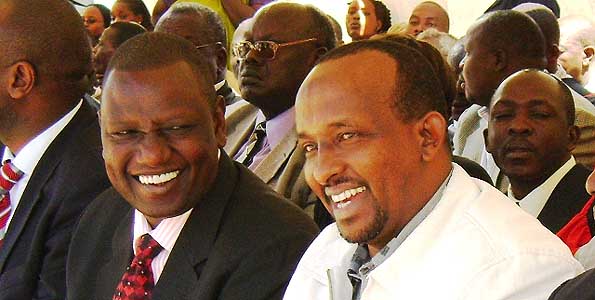
The Garissa Township Aden Barre Duale, has stated that last year in many occasions he had encouraged his constituency’s youth class to enroll in the Garissa’s Teacher’s College but to no avail. He says most of them want ‘white-collar jobs’ and in a documentary he dampens the spirits of many of Garissa’s youth who want to have white collar jobs by saying ‘the era of the white collar jobs’ for Garissa’s youth ‘is over.’
Garissa reporter had asked many of our youth why is it that they do not want to enroll into Garissa’s Teacher’s College, the answer is common and the same across the nation; ‘Once I graduate, the salary for teachers is not high enough!‘. The low salaries given to teachers working in public schools, which form the majority of schools in Garissa county, is the reason why many of the teachers had gone on a public strike last month. The public strike which was also held by the few number of teachers in Garissa, badly affected the already underdeveloped education-sector of our county.

According to USAid latest report on Garissa, only 43.9% of the county’s youth population (i.e. between the ages of 15 to 18) attend school. According to Sheikh Omar, a professor at the College of Humanities and Social Sciences in the University of Nairobi, the main reason behind such a low educational outcome is accessibility to the schools and the insufficient number of teachers in our county. Therefore, it is perceptible that the county government should prioritize educational development. And to do this, Mr. Idriss must importune Garissa’s youth to become teachers by increasing teacher’s salaries – giving employment to the youth and improving education rates in our county.
Furthermore, the county government must construct and open up meat, camel milk, tomato factories across our county – which is almost the size of Denmark. In this factories, many of the youth that have graduated from high school but are not affluent enough to join universities or colleges, may work in the production lines. This will provide employment and will improve the synthetic economical situation in our county.
In an interview with vice-governor Mr. Abdullahi about the economical situation in our county, he stated this; “Garissa County is the third largest county in Kenya. It is unique in its own way and for it to develop the people that call themselves ‘Garissans’ must bear the burden of improving it together with the county government. They must work in the building of roads and the construction of buildings and not devolve these jobs to people that come from other counties. They must know that the onus is on the Garissans themselves to materially develop the county and not rely on outsiders.”
Garissa County Government to Plant 3000 Date Palm Trees Along Kismayo Road
 he government of Sharjah which is an Emirate in the United Arab
Emirates has promised to donate to the County Government of Garissa 3000
date palm seeds. Mr. Nathif who is the governor of the fourth largest
county in Kenya said the donated seeds will be used to plant date palm
trees along Kismayo Road – the only highway in Garissa Township.
he government of Sharjah which is an Emirate in the United Arab
Emirates has promised to donate to the County Government of Garissa 3000
date palm seeds. Mr. Nathif who is the governor of the fourth largest
county in Kenya said the donated seeds will be used to plant date palm
trees along Kismayo Road – the only highway in Garissa Township.
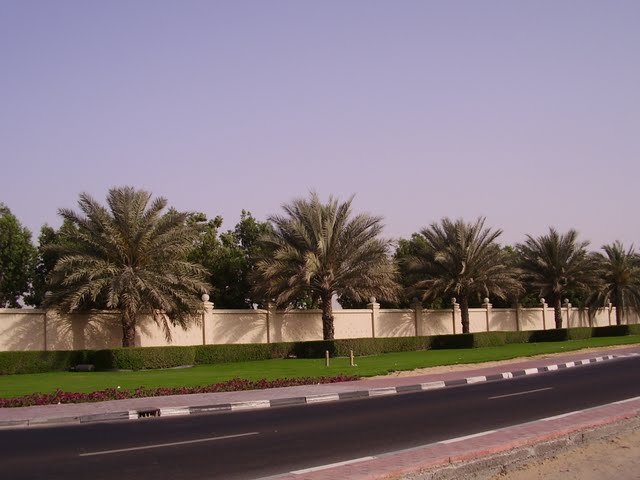
A highway in Dubai, U.A.E. Mr. Adam’s wants to make similar thoroughfares in Garissa County.
Mr. Adam’s tenure as the first governor of Garissa County so far has seen various beautification projects initiated in Garissa Township. For instance, the shacks that used to inundate the sides of Kismayo Road were cleared away by city councils and army officials last week, a new bus-stop was constructed where all the Matatu’s or mini-vans are expected to park and a new market was constructed to replace the old, dilapidated market of Souq Mugdi (which translates to the market of darkness).
Subscribe to:
Posts (Atom)